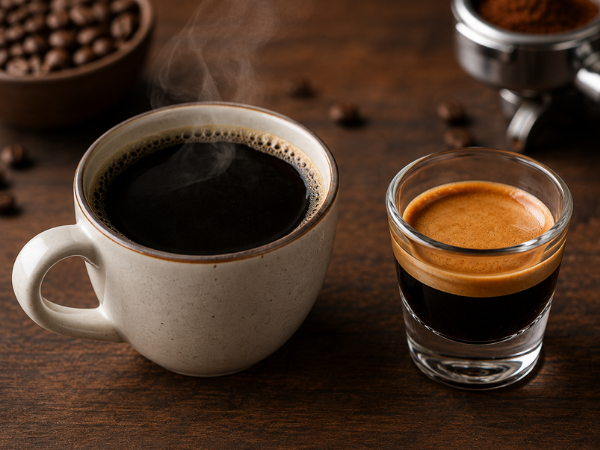
Coffee and espresso are made from the same basic ingredient: roasted coffee beans. The main difference is not the type of bean, but how the coffee is ground, brewed, and served.
Espresso is made by forcing hot water through finely ground coffee under pressure, producing a small, concentrated shot with a rich flavor and creamy crema. Regular brewed coffee uses more water and a different brewing method, resulting in a larger, lighter-bodied drink.
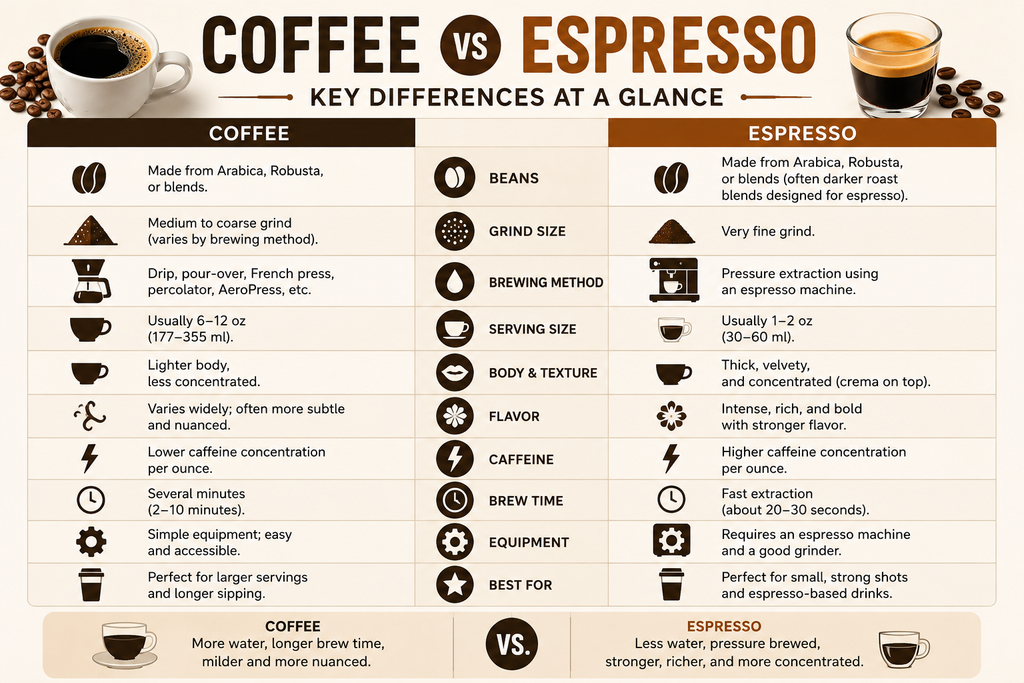
The differences between coffee and espresso go beyond brewing. Grind size, brewing time, caffeine concentration, flavor, texture, serving size, and even the type of equipment used can all affect the final drink.
In this guide, we’ll explain the key differences between coffee and espresso so you can understand which one may be better for your taste and daily routine.
The Difference Between Coffee and Espresso: 8 Key Differences
1. Coffee Beans and Ingredients
One of the most common misconceptions is that espresso requires a special type of coffee bean.
In reality, espresso and brewed coffee can be made from the same coffee beans. Both can use Arabica, Robusta, or a blend of the two.
The difference usually comes from the roast, grind size, and brewing method rather than the bean itself.
Arabica beans are often valued for their smoother, sweeter, and more complex flavors. Robusta beans generally have a stronger, more bitter character and can produce more crema when used for espresso.
Coffee roasters may create specific blends for espresso because certain combinations of beans and roast levels work particularly well under pressure. However, there is no universal “espresso bean” that must be used.
2. Different Brewing Methods
The biggest difference between coffee and espresso is the brewing process.
Regular coffee can be prepared using many methods, including:
- Drip coffee makers
- Pour-over brewers
- French presses
- Coffee percolators
- AeroPress and other manual brewers
Espresso is produced by pushing hot water through finely ground coffee under pressure. A dedicated espresso machine is normally used to control the pressure, water temperature, and extraction.
Because espresso uses a much finer grind and a different extraction process, it produces a concentrated beverage in a much smaller serving.
So while both drinks begin with roasted coffee beans, the brewing method gives them very different characteristics.
3. Caffeine Content
Caffeine is another important difference, but the answer depends heavily on serving size.
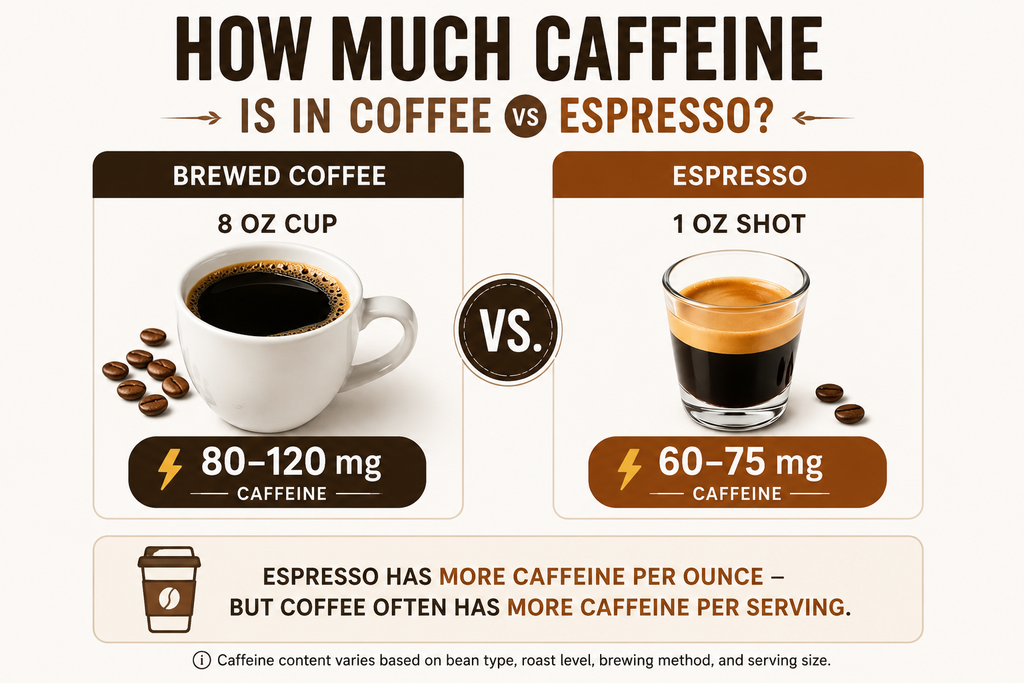
A typical 1-ounce shot of espresso contains roughly 60–75 mg of caffeine, although the actual amount varies depending on the beans, dose, and extraction.
An 8-ounce cup of brewed coffee commonly contains around 80–120 mg of caffeine, with considerable variation between coffees and brewing methods.
This means espresso is more concentrated, but a normal cup of brewed coffee can contain more total caffeine simply because it contains much more liquid.
For example:
| Drink | Typical Serving | Approx. Caffeine |
|---|---|---|
| Espresso | 1 oz | 60–75 mg |
| Brewed Coffee | 8 oz | 80–120 mg |
These numbers are general estimates rather than fixed values. The coffee variety, roast, brewing method, serving size, and preparation can all change the caffeine content.
4. Taste and Strength
Espresso usually tastes stronger and more concentrated than brewed coffee.
Because espresso is extracted into a small amount of water, it has a dense body and an intense flavor. Depending on the beans and roast, you may notice chocolate, caramel, nutty, fruity, smoky, or bitter notes.
Brewed coffee generally has a lighter body and allows more subtle flavor characteristics to come through. Pour-over coffee, for example, can highlight delicate floral, fruity, or acidic notes that may be less noticeable in espresso.
However, “stronger” does not necessarily mean that espresso contains more caffeine.
Espresso has a higher caffeine concentration per ounce, while brewed coffee often contains more caffeine in a typical serving.
5. Flavor and Texture
Flavor and texture are closely connected to the brewing method.
Espresso has a thick, concentrated texture and is often topped with a layer of crema. Crema is the golden-brown layer that forms on properly extracted espresso and contributes to its aroma and mouthfeel.
Brewed coffee contains considerably more water, so it is usually thinner and easier to drink over a longer period.
The flavor profile can also be different. Espresso tends to emphasize intense roasted and concentrated flavors, while certain brewed coffee methods can make subtle characteristics easier to identify.
The type of coffee beans, roast level, grind size, water quality, temperature, and extraction time all influence the final flavor.
6. Brewing Time
Espresso is generally much faster to brew once the espresso machine is heated and ready.
A typical espresso extraction takes around 20–30 seconds, although the exact time depends on the recipe and equipment.
Brewed coffee takes longer because the water needs to pass through or steep with a larger amount of coffee grounds.
For example:
- Espresso: usually around 20–30 seconds for the extraction
- Pour-over: often around 2–4 minutes
- French press: commonly around 4 minutes
- Drip coffee: often around 5–10 minutes, depending on the machine and amount
The total preparation time also depends on grinding the beans, heating the equipment, and preparing the water.
7. Availability and Equipment
Brewed coffee is generally easier to prepare because it requires relatively simple equipment.
You can make it with a drip coffee maker, French press, pour-over brewer, or even a basic coffee pot.
Espresso requires more specialized equipment. A proper espresso machine needs to generate sufficient pressure and maintain suitable brewing conditions.
A good grinder is also important because espresso requires a fine and consistent grind.
This makes espresso more equipment-intensive than many traditional coffee brewing methods.
However, home espresso machines have become increasingly common, giving coffee drinkers the ability to prepare espresso-based drinks such as cappuccinos, lattes, and Americanos at home.
8. Which One Should You Choose?
The better choice depends on what you want from your coffee.
Choose espresso if you prefer:
- A concentrated and intense flavor
- A thicker texture
- Small servings
- Espresso-based drinks
- Cappuccinos, lattes, and Americanos
- A fast extraction
Choose brewed coffee if you prefer:
- A larger serving
- A lighter body
- Longer drinking sessions
- Subtle and complex flavor notes
- Simple brewing equipment
- Pour-over, drip, or French press coffee
Neither option is automatically better. Espresso and brewed coffee simply provide different drinking experiences.
Coffee vs. Espresso: Quick Comparison
| Feature | Coffee | Espresso |
|---|---|---|
| Serving size | 6–12 oz | 1–2 oz |
| Grind | Medium–coarse | Fine |
| Brewing | Drip, pour-over, French press | Pressure extraction |
| Caffeine concentration | Lower | Higher |
| Texture | Lighter | Thicker |
| Brew time | Several minutes | ~20–30 sec |
Can You Use Espresso Beans to Make Regular Coffee?
Yes.
The term “espresso beans” usually refers to beans that a roaster recommends for espresso, rather than a completely different species of coffee bean.
You can use espresso-roasted beans in a drip coffee maker, French press, or pour-over brewer. The resulting coffee may have a darker, richer, or more intense flavor depending on the roast.
Likewise, beans commonly sold for brewed coffee can often be used to make espresso if they are ground correctly and the brewing recipe is adjusted appropriately.
Is Espresso Stronger Than Coffee?
Espresso is more concentrated than brewed coffee, so its flavor and caffeine concentration per ounce are generally higher.
However, a full cup of brewed coffee can contain more total caffeine than a single shot of espresso because the serving is much larger.
So when someone asks whether espresso is “stronger,” it is important to distinguish between flavor intensity, caffeine concentration, and total caffeine.
Is espresso stronger than coffee?
Yes. Espresso has a more concentrated flavor and more caffeine per ounce than brewed coffee.
Does espresso have more caffeine than coffee?
Not necessarily. Espresso has more caffeine per ounce, but a full cup of coffee usually contains more total caffeine.
Can you use espresso beans for regular coffee?
Yes. Espresso beans can be used in drip coffee makers, French presses, and pour-over brewers.
Can you make espresso without an espresso machine?
Not true espresso. A Moka pot or AeroPress can make a strong coffee, but espresso requires pressure-based extraction.