
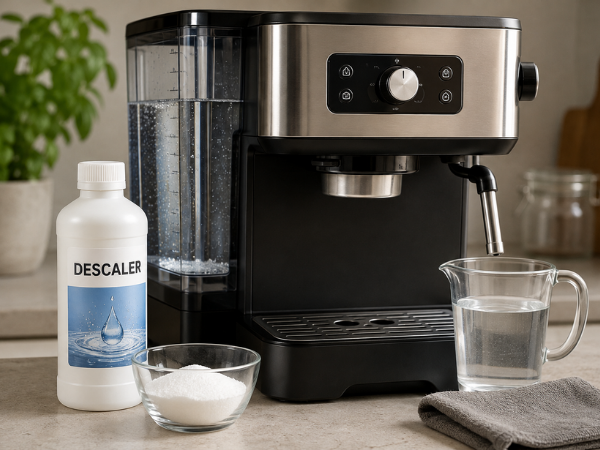
For many coffee machine owners, descaling can feel like a complicated chore. However, with the right descaling product and a simple process, keeping your coffee machine free from mineral buildup can be much easier.
So, what exactly is coffee machine descaler? How does it work, what types are available, and how often should you descale your machine?
In this guide, we’ll answer these questions and walk you through the basic steps for safely descaling a coffee machine.
What Is Coffee Machine Descaler?
Before discussing coffee machine descaler, it helps to understand what descaling actually means.
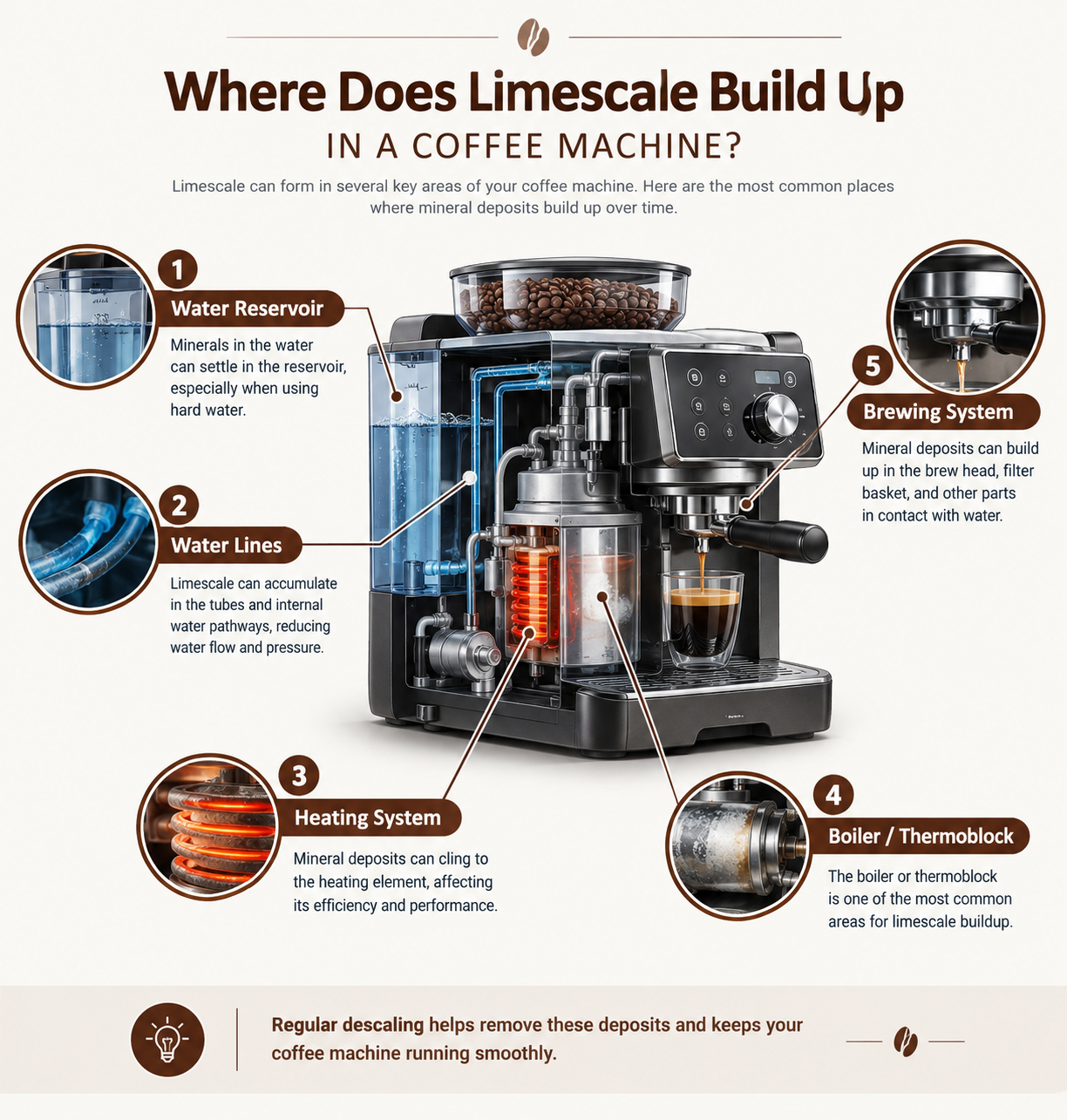
Descaling is the process of removing mineral deposits and limescale that build up inside a coffee machine over time. These deposits are primarily associated with minerals found in water and can accumulate in areas such as the water reservoir, internal water pathways, heating components, and other parts of the machine.
A coffee machine descaler is a product designed to dissolve or loosen these mineral deposits so they can be flushed out of the machine.
Descalers are available in several forms, including liquids, powders, and tablets. Some people also use household ingredients for descaling, although the safest option is generally to follow the cleaning and descaling instructions provided by the coffee machine manufacturer.
Types of Coffee Machine Descalers
Coffee machine descalers can be divided into several categories based on their ingredients and form.
The most common options include:
- Citric acid
- White vinegar
- Commercial descaling products
Each option works differently and may not be suitable for every coffee machine. Always check your machine’s manual before choosing a descaling method.
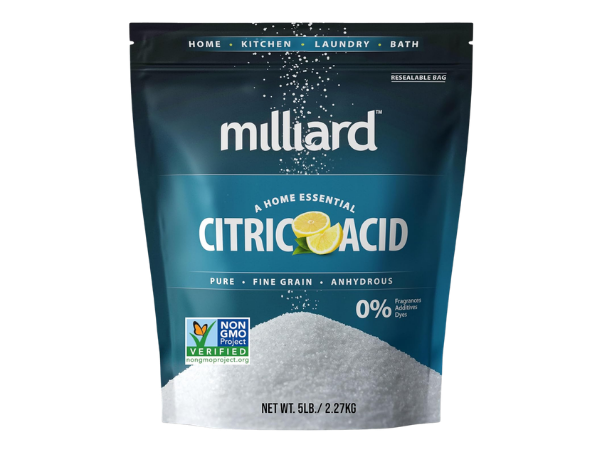
Citric Acid
Citric acid is a naturally occurring acid found in citrus fruits such as lemons and limes. It is also available as a dry powder and is commonly used for removing mineral deposits.
Citric acid can be effective at dissolving limescale, but the concentration and preparation method are important. Rather than using a universal mixing ratio, follow the instructions supplied with the citric acid product or your coffee machine manufacturer.
Using too much acid is not necessarily better and could be inappropriate for some machines.
White Vinegar
White vinegar is another household product sometimes used for descaling coffee machines.
However, vinegar is not recommended for every coffee machine. Some manufacturers specifically advise against using vinegar because of its acidity, odor, or potential effect on certain components.
If your machine’s manufacturer allows vinegar for descaling, follow the recommended dilution and cleaning procedure. Otherwise, use a compatible commercial descaler.

Commercial Descaling Products
Commercial descaling products are specifically formulated for removing mineral deposits from coffee machines.
They are commonly available as:
- Liquid descalers
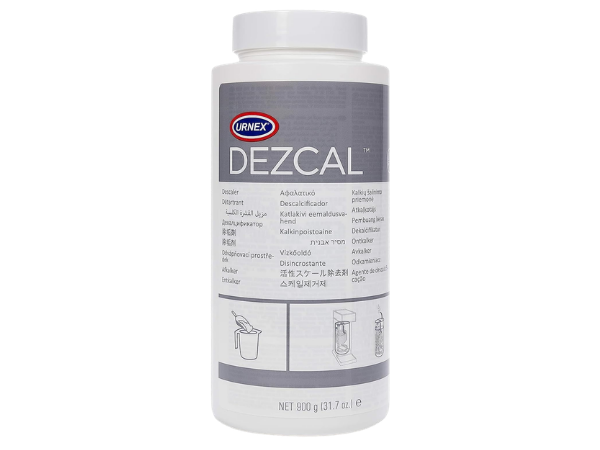
- Descaling powders
- Descaling tablets
The main advantage of a commercial descaler is that you can choose a product designed for a particular type or brand of coffee machine.
Before purchasing one, check the product instructions and confirm that it is compatible with your machine.
When your coffee machine manufacturer offers its own descaling product, following the manufacturer’s recommendation is usually the simplest approach.
How Does Coffee Machine Descaler Work?
Coffee machines contain internal components that are difficult or impossible to clean by hand.
As water passes through the machine, minerals can gradually accumulate inside its water system. Over time, this buildup can affect water flow and the machine’s overall performance.
A descaling solution works by reacting with these mineral deposits and helping to dissolve or loosen them. The solution then travels through the machine and carries the loosened deposits away when the system is flushed.
However, different descaling products have different formulations, so they should always be used according to their instructions.
Choosing a compatible descaler is particularly important for automatic and espresso machines with complex internal water systems.
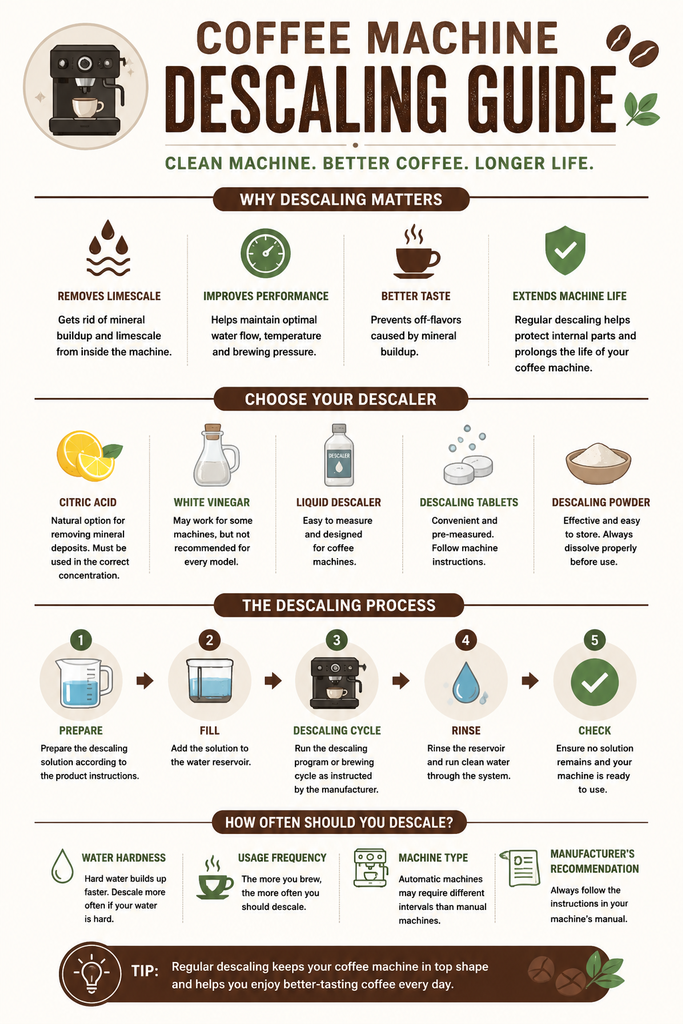
How to Descale Your Coffee Machine: Step-by-Step Guide
Descaling procedures vary between coffee machines, but the general process is similar.
Before starting, read your coffee machine’s manual and follow the manufacturer’s descaling instructions whenever they are available.
How to Descale a Coffee Machine in 5 Steps
Follow these basic steps, while always checking the instructions provided by your coffee machine manufacturer.
Choose the Right Descaler
Select a descaling product that is compatible with your coffee machine.
Prepare the Solution
Mix or prepare the descaler exactly as directed by the product or manufacturer.
Run the Descaling Cycle
Add the solution to the reservoir and run your machine’s recommended descaling cycle.
Rinse the Machine
Empty the reservoir, refill it with clean water, and run the required rinse cycles.
Check the Machine
Make sure no descaling solution, odor, or residue remains before brewing coffee again.
Step 1: Choose the Right Descaler
The first step is selecting a descaling product that is compatible with your coffee machine.
If the manufacturer recommends a specific descaler, that should be your first choice.
If you are considering a universal descaling product, carefully check its compatibility before using it.
Do not assume that every descaling solution is suitable for every coffee machine.
Step 2: Prepare the Descaling Solution
The next step is to prepare the descaling solution according to the product instructions.
Some liquid descalers need to be diluted with water, while tablets and powders may require a specific amount of water to dissolve properly.
Do not guess the concentration. Use the instructions printed on the product packaging or provided by the coffee machine manufacturer.
Step 3: Run the Descaling Cycle
Add the prepared descaling solution to the machine’s water reservoir.
If your machine has a dedicated descaling mode, activate it and follow the instructions shown by the machine.
During the process, the descaling solution will pass through the internal water system and help remove mineral deposits.
Depending on the machine, the process may also involve running water through the brewing system or steam wand.
Do not interrupt the cycle unless the manufacturer’s instructions tell you to do so.
Step 4: Rinse the Machine
Once the descaling cycle is complete, empty the reservoir and rinse it thoroughly.
Fill the reservoir with clean water and run the machine’s recommended rinsing cycle.
You may need to repeat the rinsing process more than once, depending on the machine and the descaling product.
The goal is to remove any remaining descaling solution before making coffee again.
Step 5: Check the Machine
After rinsing, check the machine for any remaining odor or taste from the descaling solution.
Run additional clean-water cycles if necessary.
Once the machine has been thoroughly rinsed and there is no noticeable residue, it should be ready for normal use again.
Why Is Descaling Important?
Regular descaling helps maintain the internal water system of a coffee machine and can be particularly important when using hard water.
Here are some of the main reasons descaling matters.
It Removes Limescale
Limescale is a mineral deposit that can accumulate inside coffee machines over time.
As deposits build up, they can restrict water flow and affect the operation of internal components.
Regular descaling helps remove this buildup before it becomes a larger problem.
It Helps Maintain Consistent Brewing
Mineral buildup can affect the way water moves through a coffee machine.
Keeping the internal water system clean can help the machine maintain more consistent brewing performance.
For espresso machines, maintaining the water system is especially important because brewing depends on controlled water flow and temperature.
It Removes Mineral Buildup
Limescale is not the only type of mineral deposit that can accumulate inside a coffee machine.
Depending on the water supply and machine design, other mineral deposits may also develop inside the water system.
Descaling helps dissolve and flush out these deposits.
It Can Help Extend the Life of Your Coffee Machine
Regular maintenance can help keep a coffee machine operating properly for longer.
Descaling is only one part of machine maintenance, but it can help prevent mineral buildup from becoming a significant issue.
For the best maintenance schedule, always follow the recommendations for your specific model.
How Often Should You Descale Your Machine?
There is no single descaling schedule that works for every coffee machine.
The ideal frequency depends on several factors, including:
- Water hardness
- How often you use the machine
- The type of coffee machine
- Whether the machine has a built-in water filter
- The manufacturer’s recommendations
Descaling for Regular Home Use
A coffee machine used at home may require descaling anywhere from several times a year to more frequently, depending on water hardness and usage.
If you use hard water, mineral deposits may develop more quickly.
Instead of relying on a fixed schedule, check your machine’s manual and pay attention to its descaling indicator if one is available.
Descaling for Office Use
Coffee machines in offices may be used considerably more often than machines in a typical household.
Higher daily usage can mean more water passes through the machine, potentially increasing the rate at which mineral deposits accumulate.
For this reason, office machines may require more frequent maintenance.
Again, the manufacturer’s recommended schedule should be the starting point.
Descaling for Coffee Shops and Commercial Use
Commercial coffee machines can handle a much higher workload than typical home machines.
Because they may produce many drinks every day, regular maintenance is especially important.
Commercial machines should be descaled according to the manufacturer’s maintenance schedule, taking into account water hardness and daily usage.
For busy coffee shops, professional maintenance may also be necessary in addition to routine descaling.
Signs That Your Coffee Machine May Need Descaling
Besides following a scheduled maintenance routine, there are several signs that may indicate mineral buildup.
You may notice:
- Slower water flow
- Reduced brewing performance
- Changes in water temperature
- Unusual noises during operation
- Visible mineral deposits
- A machine descaling warning
If your machine displays a descaling notification, follow the manufacturer’s instructions rather than waiting for performance problems to appear.
Liquid Descaler vs. Tablets vs. Powders: Which One Should You Choose?
Coffee machine descalers are available in different forms, but the best choice depends primarily on your machine and the manufacturer’s recommendations.
Liquid Descaler
Liquid descalers are convenient because they are usually easy to measure and mix with water.
They can be particularly convenient when a machine requires a specific liquid descaling solution.
Descaling Tablets
Tablets are compact and easy to store.
They can also provide a consistent amount of descaling agent when used according to the manufacturer’s instructions.
However, not every coffee machine is designed to use descaling tablets, so compatibility should always be checked first.
Descaling Powder
Powdered descalers are another common option.
They are usually dissolved in water before being added to the machine.
As with liquid products and tablets, follow the instructions for the specific product and coffee machine.
Which Type Is Best?
There is no universally best form of descaler.
The most important consideration is compatibility with your coffee machine.
Check the user manual to see whether the manufacturer recommends a particular type or product.
If the manufacturer provides its own descaler, using that product is generally the safest way to follow the machine’s maintenance instructions.
Is descaling necessary for home coffee machines?
Yes. Home coffee machines can also accumulate mineral deposits, especially when they are used with hard water.
The frequency of descaling depends on the machine, water quality, and frequency of use.
What is the difference between cleaning and descaling?
Cleaning and descaling are two different maintenance tasks.
Cleaning generally removes coffee oils, residue, and other organic material from parts of the machine.
Descaling focuses primarily on removing mineral deposits such as limescale from the water system.
Both types of maintenance are important for keeping a coffee machine in good working condition.
How much does coffee machine descaling cost?
The cost depends on the type and brand of descaler you choose.
Liquid solutions, tablets, and powders are available at different prices, while some coffee machine manufacturers sell their own branded descaling products.
What if my coffee machine still smells after descaling?
If you notice a smell after descaling, run additional clean-water rinsing cycles according to your machine’s instructions.
Make sure the water reservoir and removable components are also thoroughly rinsed.
If the smell continues, check the manufacturer’s troubleshooting instructions before using the machine again.