

Black coffee is one of the simplest ways to enjoy coffee without added sugar, cream, or milk. For many people, a morning cup provides a welcome boost of energy and alertness. But drinking too much coffee can cause unwanted side effects, particularly because of its caffeine content.
So, what are the side effects of drinking black coffee?
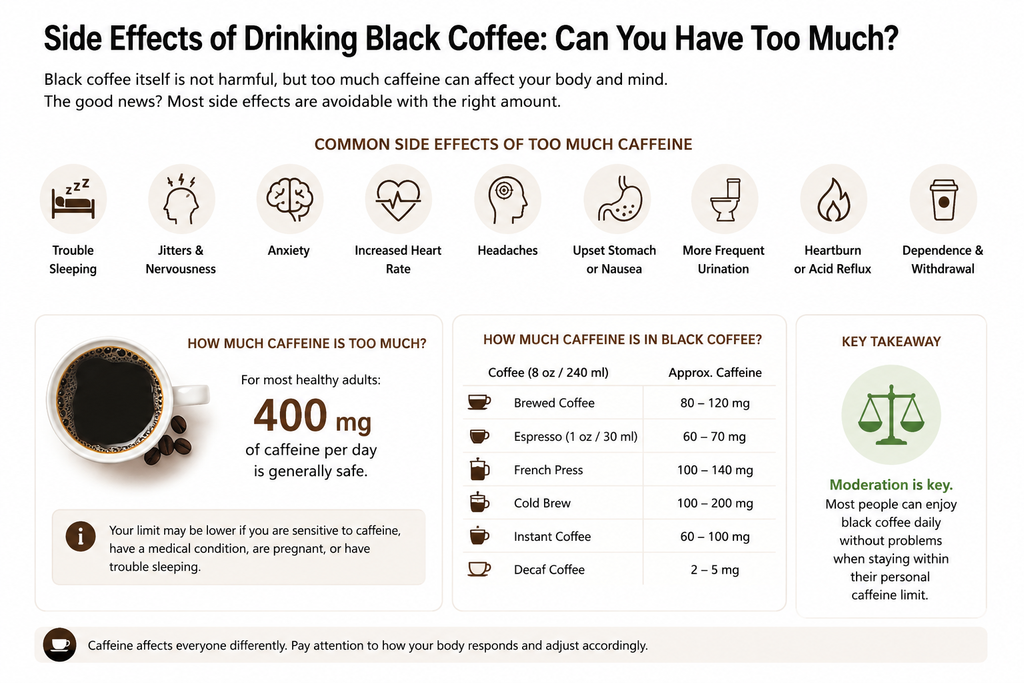
For most healthy adults, moderate caffeine intake is generally considered safe. The FDA cites 400 mg of caffeine per day as an amount not generally associated with negative effects for most adults, although sensitivity varies considerably from person to person.
Side Effects of Drinking Black Coffee: Can You Have Too Much?
Black coffee itself is not necessarily harmful. In most cases, the main concern is caffeine.
Too much caffeine can affect the nervous system, digestive system, sleep, and heart rate. Some people may notice symptoms after only a small amount, while others can drink several cups without obvious problems.
Common side effects of excessive caffeine intake include:
- Trouble sleeping or insomnia
- Jitters and nervousness
- Anxiety
- Increased heart rate or palpitations
- Headaches
- Upset stomach or nausea
- More frequent urination
- Heartburn or acid reflux
- Caffeine dependence and withdrawal symptoms
The amount of caffeine in coffee varies considerably depending on the beans, brewing method, serving size, and strength of the drink.
1. Sleep Problems and Insomnia
One of the most noticeable side effects of drinking too much black coffee is difficulty sleeping.
Caffeine is a stimulant that can increase alertness and make it harder for the brain to wind down. Drinking coffee later in the afternoon or evening may therefore interfere with your normal sleep schedule.
This can create a cycle: you drink coffee because you are tired, sleep poorly, and then rely on more coffee the following day.
Harvard Health notes that coffee and other caffeinated beverages can impair sleep, while avoiding coffee later in the day can help reduce this problem.
2. Anxiety, Jitters, and Nervousness
Too much caffeine can overstimulate the nervous system.
Some people may experience:
- Restlessness
- Shaking or jitters
- Nervousness
- Irritability
- Increased anxiety
- Difficulty concentrating
These effects are more likely when you consume a large amount of caffeine at once or are particularly sensitive to it.
3. Headaches and Caffeine Withdrawal
Coffee has an interesting relationship with headaches.
Caffeine can sometimes be included in headache medicines and may temporarily affect certain types of headaches. However, regularly consuming caffeine can also lead to dependence.
If you suddenly stop drinking coffee after consuming it regularly, you may experience withdrawal symptoms such as:
- Headache
- Fatigue
- Irritability
- Difficulty concentrating
- Sleepiness
For this reason, people who drink several cups every day may find it easier to reduce their caffeine intake gradually rather than stopping suddenly.
4. Stomach Upset and Acid Reflux
Black coffee can bother the digestive system in some people.
Coffee may stimulate stomach acid production, and caffeine can contribute to symptoms such as heartburn or reflux in susceptible individuals. Harvard Health lists coffee and other caffeine-containing drinks among common triggers that can worsen heartburn and reflux symptoms.
You may be more likely to notice problems if you:
- Drink coffee on an empty stomach
- Consume several cups in a short period
- Already experience acid reflux or heartburn
- Drink very strong coffee
- Drink coffee shortly before lying down
If black coffee consistently causes stomach discomfort, try a smaller serving, drink it with food, or switch to decaffeinated coffee and see whether your symptoms improve.
5. Increased Urination
Caffeine has a mild diuretic effect, meaning it can increase urine production.
As a result, drinking coffee may make you need to urinate more frequently. This effect can be particularly noticeable after consuming larger amounts of caffeine.
However, this does not mean that drinking coffee automatically causes kidney damage. The original claim that several cups of coffee are a “significant fact of kidney damage” is not accurate.
For people who already experience urinary frequency or bladder symptoms, reducing caffeinated drinks may help. NIDDK notes that caffeine can contribute to urinary symptoms in some people.
6. Fast Heartbeat and Palpitations
Caffeine can temporarily stimulate the cardiovascular system.
After consuming too much caffeine, some people may notice:
- A faster heartbeat
- Palpitations
- Feeling their heart beating more strongly
- Temporary increases in blood pressure
If coffee repeatedly causes significant palpitations, chest pain, fainting, or other concerning symptoms, it is important to speak with a healthcare professional rather than simply continuing to increase or decrease your coffee intake on your own.
7. Black Coffee Can Become a Daily Habit
Caffeine can lead to physical dependence when consumed regularly.
That does not mean that everyone who drinks coffee is “addicted.” However, regular caffeine consumption can make your body accustomed to having it.
You may notice that you need coffee to feel alert in the morning or develop a headache when you skip your usual cup.
This is one reason to pay attention to your total daily caffeine intake rather than focusing only on the number of cups of coffee.
How Much Black Coffee Is Too Much?
For most healthy adults, up to 400 mg of caffeine per day is generally considered safe. However, the amount of coffee that reaches this limit depends on the brew and serving size.
| Black Coffee | Approx. Caffeine |
|---|---|
| 1 cup (8 oz) | 80–120 mg |
| 2 cups | 160–240 mg |
| 3 cups | 240–360 mg |
| 4 cups | 320–480 mg |
If coffee causes insomnia, anxiety, jitters, headaches, heartburn, or a racing heartbeat, your personal limit may be lower.
Who Should Be More Careful With Black Coffee?
Most healthy adults can enjoy black coffee in moderation. However, some people may be more sensitive to caffeine and should pay closer attention to how much they consume.
You may need to limit black coffee if you:
- Are sensitive to caffeine or experience jitters, anxiety, or a fast heartbeat
- Have sleep problems, especially if you drink coffee later in the day
- Experience heartburn or acid reflux
- Have certain heart or blood pressure conditions
- Are pregnant or trying to become pregnant
- Take medications that may interact with caffeine
If you are unsure how much caffeine is appropriate for you, especially if you have a medical condition or take medication regularly, talk with your healthcare professional.
How to Reduce the Side Effects of Black Coffee
If you enjoy black coffee but notice unwanted effects, you do not necessarily have to give it up completely.
Try these simple changes:
Drink less at one time.
Instead of a very large serving, choose a smaller cup.
Reduce your total caffeine intake.
Remember that caffeine also comes from tea, chocolate, energy drinks, soft drinks, and some medications.
Avoid coffee late in the day.
This can be especially helpful if coffee interferes with your sleep.
Do not ignore digestive symptoms.
If coffee regularly causes heartburn or stomach discomfort, experiment with smaller amounts or decaf.
Reduce caffeine gradually.
If you drink several cups every day, gradually cutting back may help minimize withdrawal headaches and fatigue.
Pay attention to your individual response.
There is no need to force yourself to reach a particular caffeine limit if you already experience unpleasant effects at a lower amount.
Is Black Coffee Bad for You?
For most healthy adults, black coffee can be part of a normal diet when consumed in moderation.
The main concern is usually how much caffeine you consume and how your body responds to it, rather than the fact that the coffee is black.
Black coffee also has an advantage over many sweetened coffee drinks because it contains no added sugar or cream unless you add them yourself.
The key is moderation. If one or two cups make you feel alert and comfortable, there may be little reason to worry. If several cups leave you anxious, unable to sleep, or experiencing digestive problems, reducing your intake is a sensible choice.