

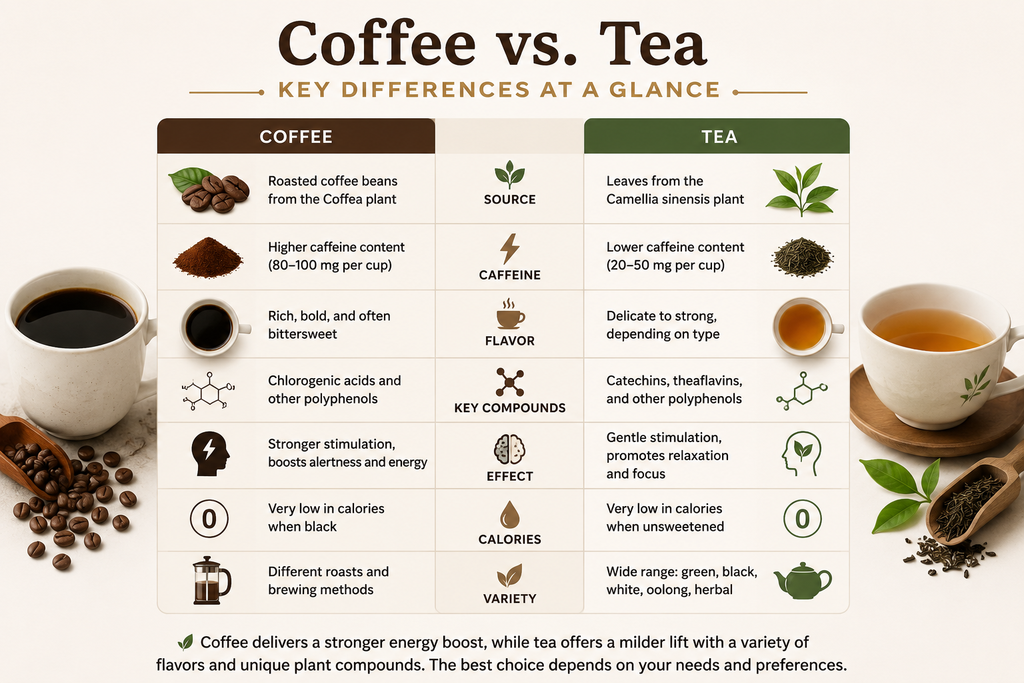
Coffee and tea are two of the most consumed beverages worldwide, each with a rich cultural history and unique health benefits. While coffee is often associated with energy and productivity, tea is linked to relaxation and wellness.
Coffee and Tea: Key Differences to Know
Coffee is more than just a morning ritual; it’s a beverage packed with compounds that can support health. Studies show that moderate coffee consumption may reduce the risk of certain chronic diseases and improve mental alertness.
- Improved Cognitive Function – Caffeine stimulates the central nervous system, enhancing focus and memory.
- Reduced Risk of Type 2 Diabetes – Regular consumption has been linked to better glucose metabolism.
- Liver Protection – Coffee may lower the risk of liver cirrhosis and fatty liver disease.
- Heart Health – Moderate intake can reduce the risk of heart failure.
- Mood Enhancement – Coffee consumption is associated with lower rates of depression.
Overall, coffee provides a quick energy boost and long-term protective effects when consumed in moderation. However, excessive intake may lead to jitters or sleep disturbances.
Why Tea Is Considered a Healthy Drink
Tea’s reputation comes largely from its polyphenols. Green tea contains high levels of catechins, while black tea develops a different group of compounds during oxidation.
These tea compounds have been investigated for their possible effects on cardiovascular and metabolic health. Tea is also an easy way to consume a flavorful drink without adding many calories, provided it is not heavily sweetened.
- Rich in Antioxidants – Green tea is especially high in catechins, which fight oxidative stress.
- Supports Heart Health – Regular tea drinkers may have lower cholesterol and blood pressure.
- Digestive Aid – Herbal teas like peppermint and ginger soothe the stomach.
- Immune Support – Compounds in tea can strengthen immune defenses.
- Calming Effects – L-theanine in tea promotes relaxation without drowsiness.
The type of tea matters. Green tea, black tea, white tea, and oolong tea are processed differently, so they do not have identical amounts or combinations of plant compounds.
Caffeine Content in Coffee vs. Tea
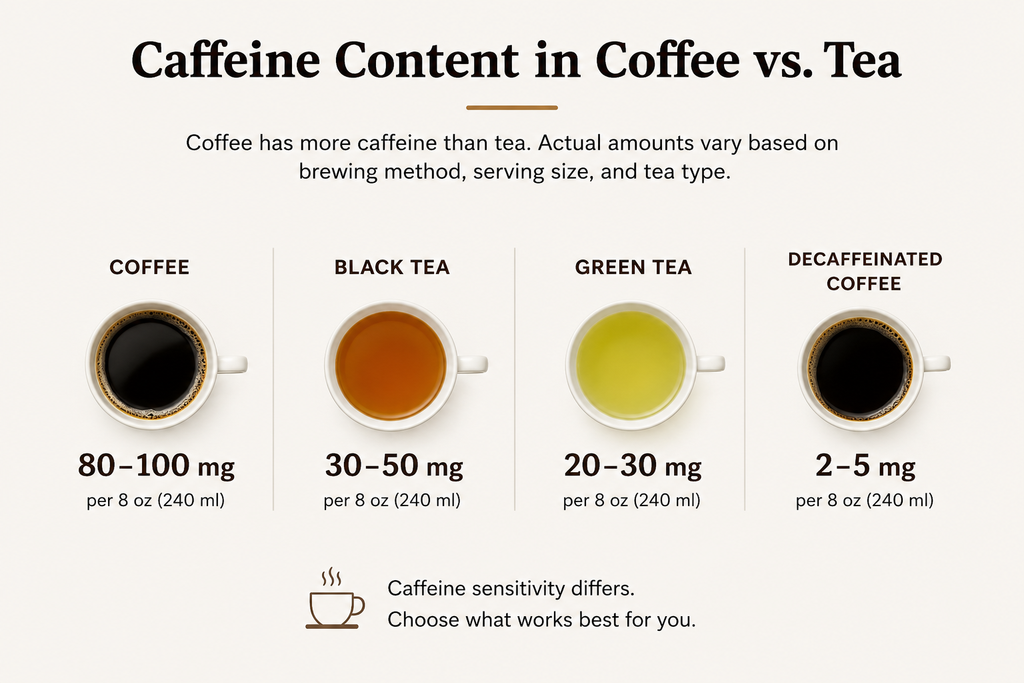
A typical cup of brewed coffee contains around 80 to 100 milligrams of caffeine, while black tea often provides about 30 to 50 milligrams. Green tea is usually lower still. These are only general figures because serving size, brewing time, water temperature, and the particular coffee or tea can change the final amount considerably.
If you need a strong morning boost, coffee is usually the more effective choice. Tea makes more sense when you want a smaller dose of caffeine that is less likely to feel overwhelming.
Caffeine sensitivity varies widely. For some people, an afternoon coffee has no noticeable effect on sleep; for others, even a modest amount can make falling asleep more difficult.
Antioxidants and Other Beneficial Compounds
Coffee is particularly rich in chlorogenic acids, which contribute to its characteristic bitterness and acidity. Tea contains catechins and other polyphenols that vary according to the type and processing of the leaves.
- Polyphenols in Tea – Catechins and flavonoids reduce inflammation.
- Chlorogenic Acids in Coffee – Linked to improved metabolism and reduced blood sugar.
- L-theanine in Tea – Promotes relaxation and focus.
- Diterpenes in Coffee – May influence cholesterol levels.
- Overall Antioxidant Power – Both drinks contribute to reduced oxidative stress.
Incorporating either beverage into your diet can provide protective compounds, though tea tends to be gentler and coffee more stimulating.
How Coffee and Tea May Affect Weight
Neither coffee nor tea is a magic weight-loss drink, but caffeine can influence energy expenditure and appetite for a limited period.
Coffee may have a small effect on calorie burning because of its caffeine content. Green tea has also been studied for its combination of caffeine and catechins, although any effect on body weight is generally modest.
The biggest difference often comes from what you put in the cup. Black coffee and unsweetened tea contain very few calories. Add sugar, flavored syrup, whipped cream, or a generous amount of sweetened milk, and the calorie content can increase substantially.
For weight management, the preparation may matter more than the choice between coffee and tea.
Potential Downsides of Coffee and Tea
The main drawback of both drinks is caffeine. Too much can cause jitters, headaches, restlessness, anxiety, or sleep problems.
Coffee is more likely to produce these effects simply because it usually contains more caffeine per serving. Some people may also find coffee more irritating to the stomach or more likely to aggravate acid reflux.
Tea is generally milder, but that does not make unlimited consumption a good idea. Strongly brewed tea can still provide a substantial amount of caffeine.
Sugar is another issue. Turning an otherwise low-calorie drink into a heavily sweetened beverage can easily offset some of its nutritional advantages.
Which Drink Is Better for Your Health?
The ultimate choice between coffee and tea depends on your health goals and personal preferences. Coffee offers stronger stimulation and potential metabolic benefits, while tea provides relaxation and long-term wellness support.
- Coffee for Energy – Best for productivity and quick alertness.
- Tea for Balance – Ideal for relaxation and sustained focus.
- Individual Health Needs – Choose based on tolerance and medical conditions.
- Cultural Preference – Traditions often shape beverage choice.
- Balanced Approach – Many people enjoy both at different times of day.
Coffee and tea are different drinks with different strengths. The healthiest choice is usually not about finding a winner, but about choosing the one that suits you and drinking it sensibly.